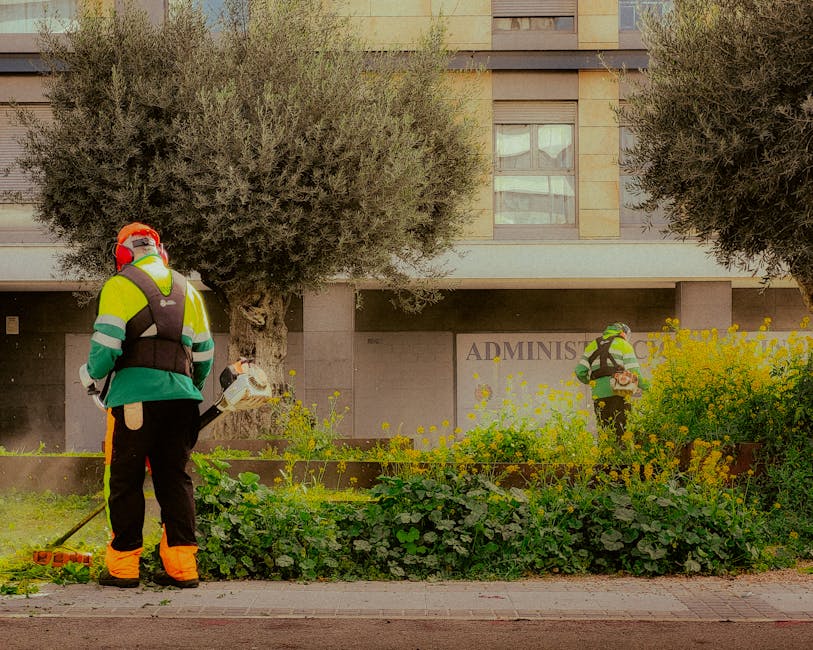
Garden maintenance near Earlscourt Station for flats
If you live in a flat near Earlscourt Station, you already know the little green spaces can make a big difference. A tidy courtyard, shared front patch, balcony planter area, or small communal garden changes the whole feel of the building. It softens the noise, makes the place look cared for, and gives residents somewhere pleasant to step into for a minute of fresh air. But keeping those spaces looking good is another matter entirely.
Garden maintenance near Earlscourt Station for flats is really about making compact, shared outdoor spaces easy to live with. That means regular lawn care where grass exists, pruning, leaf clearance, hedge shaping, weed control, seasonal tidy-ups, and sensible waste handling. It also means working around residents, access routes, bin stores, parking limits, and the simple fact that flat living rarely gives you much room to store tools or get stuck in on a Sunday morning.
This guide walks through how flat garden maintenance works in practice, what matters most near Earlscourt Station, how to judge a good service, and what to avoid if you want the space to stay neat without becoming a nuisance. If you are comparing providers, it can help to start with the services overview and then look at pricing and quotes so you can match the level of care to the size and condition of the garden. Simple, really - but the details matter.
Table of Contents
- Why Garden maintenance near Earlscourt Station for flats Matters
- How Garden maintenance near Earlscourt Station for flats Works
- Key Benefits and Practical Advantages
- Who This Is For and When It Makes Sense
- Step-by-Step Guidance
- Expert Tips for Better Results
- Common Mistakes to Avoid
- Tools, Resources and Recommendations
- Law, Compliance, Standards, or Best Practice
- Options, Methods, or Comparison Table
- Case Study or Real-World Example
- Practical Checklist
- Conclusion
- Frequently Asked Questions
Why Garden maintenance near Earlscourt Station for flats Matters
Flat gardens are often treated as an afterthought. That is usually where the trouble starts. A small shared green space can go from pleasant to untidy quite quickly: grass gets patchy, weeds take over around paving, shrubs flop into walkways, and leaf litter builds up near drains and entrance paths. In a dense London setting, that doesn't just look messy. It can make the whole building feel less cared for.
Near Earlscourt Station, many residential properties are close to busy streets, foot traffic, rail activity, and the day-to-day pressure of London living. For flats, that means outdoor areas need a maintenance routine that is consistent, not occasional. You want the garden to look good on a normal Tuesday morning, not only after a heroic spring clean-up.
There is also a practical side. Shared gardens are used by more than one household, and sometimes by visitors, managing agents, or ground-floor residents who see the space every day. If maintenance slips, small issues turn into disputes: who is responsible, who pays, who should have noticed the weeds, why is the hedge blocking the path again? Not glamorous, but very real.
A good maintenance plan reduces that friction. It keeps outdoor areas usable, improves first impressions, and makes the building feel calmer. It can also protect planting investment, because a neglected border in a shared garden can deteriorate surprisingly fast. Truth be told, a little regular care saves far more effort than sporadic rescue work.
For building managers and residents, this is also a trust issue. If a service provider is clear about scope, safety, and communication, the whole arrangement runs more smoothly. Pages like the health and safety policy and insurance and safety information are useful because shared spaces need proper procedures, not just a mower and good intentions.
How Garden maintenance near Earlscourt Station for flats Works
In flat developments, garden maintenance usually follows a simple but structured process. The exact service varies by site, but the work generally starts with a walk-through or quote assessment. That is where the provider looks at the size of the space, access, surfaces, planting style, waste volume, and any awkward bits such as narrow side entrances or locked communal gates.
From there, a maintenance plan is agreed. For some properties, that may be weekly during the growing season and less frequent in winter. For others, it could be fortnightly or monthly, with extra visits for hedge cuts, autumn leaf clearance, or a seasonal tidy-up. The best schedule is the one that fits the garden, not the other way around.
Typical tasks for flats include:
- lawn mowing and edging where grass is present
- weeding borders, paving joints, and gravel areas
- hedge trimming and light shrub shaping
- leaf clearance and general tidying
- pruning dead or overgrown growth
- watering advice or light watering where agreed
- green waste removal and responsible disposal
Some buildings also need attention to non-lawn areas. Think container planting, small courtyard beds, entrance planting, or communal planters by bike stores and ground-floor windows. These are small spaces, yes, but they still need an eye. They can look immaculate with modest effort, or shabby with almost no effort at all. That's the odd thing about compact gardens.
Professional services should also be able to work around residents respectfully. That means keeping noise sensible, avoiding blocked access, and leaving shared paths safe and clear. In a flat, people do not want to step over hedge clippings on their way to work at 8:10 a.m., and fair enough.
If you are comparing providers, ask whether they offer a broader range of garden and grounds support beyond simple mowing. A good starting point is the services overview, which helps you see how the maintenance package fits the needs of a flat block rather than a private house.
Key Benefits and Practical Advantages
The obvious benefit is appearance. A well-kept communal garden immediately lifts the feel of the whole building. But there are several other advantages that matter just as much in day-to-day living.
1. Better shared living conditions. When outdoor spaces are tidy, residents are less likely to complain, and managers spend less time chasing preventable issues. Small improvements in orderliness can make shared living feel less tense.
2. Safer walkways and entrances. Regular clearance of leaves, moss, overhanging growth, and stray clippings helps keep paths easier to use. That matters especially in damp weather, which, let's face it, is not exactly rare in London.
3. Healthier planting. Shrubs and borders that are pruned correctly tend to grow better and look more balanced. Weeds and dead material are removed before they smother everything else. It is a small thing, but plants do notice.
4. Reduced stress for residents and managers. Shared gardens can become a recurring issue in block management. A reliable routine takes the pressure off everyone. No one wants to be the person sending another "the back garden needs a sort out" message.
5. Better value from the space. Even a modest courtyard becomes more useful when it is maintained. Residents are more likely to sit outside, open windows, or simply enjoy looking at something green instead of patchy weed growth.
6. Easier budgeting. Regular maintenance is easier to plan for than sporadic emergency clearances. If you are trying to manage communal costs sensibly, that predictability is a real advantage. You can review options through the pricing and quotes page to understand how scope and frequency affect cost.
Expert takeaway: the best flat-garden maintenance is rarely the most dramatic. It is the one that quietly prevents problems, keeps access clear, and makes the building feel looked after every week, not just after a big seasonal tidy.
Who This Is For and When It Makes Sense
This kind of service is a natural fit for several types of property and people. If you recognise your situation below, the answer is probably yes, you do need a proper maintenance plan.
- Flat blocks with communal gardens that are used by multiple residents.
- Ground-floor flats with shared access where plants, hedges, or borders affect entrances and windows.
- Managing agents and landlords who need a dependable routine without micromanaging every visit.
- Residents' associations trying to keep a development presentable and fair for everyone.
- Smaller conversions with one or two shared outdoor areas that still need attention.
- Busy households that want the outdoor space maintained but do not have the time, tools, or storage for it.
It also makes sense when the space is technically "small" but still tricky. A narrow strip along railings, a paved courtyard with planters, or a patch of grass bordered by access paths may not look like much on paper. In practice, those spaces need regular work because they are always visible.
There are times when a full maintenance service is more than you need. If the space has no planting and only needs seasonal leaf clearance, a lighter schedule may be enough. But if weeds appear every fortnight and shrubs are cutting into the path, a reactive approach will get expensive and annoying. Fast.
For properties that value clear communication and resident reassurance, useful support pages like the accessibility statement and payment and security information can help show how the service is handled responsibly.
Step-by-Step Guidance
If you are arranging garden maintenance for flats near Earlscourt Station, the process is easiest when you tackle it methodically. No drama, just a tidy sequence.
- Assess the space properly. Walk the garden from entrance to edge. Note lawns, borders, paved areas, planters, access gates, and any trip hazards. Look at what gets messy fastest.
- Define the service scope. Decide whether you need mowing, edging, hedge cutting, weed control, leaf clearance, or a one-off reset before moving to regular visits.
- Check access and timing. In flats, access can be everything. Confirm gate codes, key holding arrangements, resident quiet periods, and where equipment can be safely stored during the visit.
- Request a clear quote. Ask what is included, how often visits will happen, and whether waste removal is part of the price. If something sounds vague, ask again. Better now than later.
- Agree who is responsible for what. This matters in blocks. Is the contractor trimming shrubs only, or is someone else handling planting and watering? Clarity avoids crossed wires.
- Set a maintenance rhythm. Weekly, fortnightly, or monthly depends on growth rate and visibility. A courtyard with fast-growing weeds may need more attention than a mostly paved space.
- Review after the first couple of visits. Check whether the standard matches the expectation. If the garden still looks rough in the same place every time, adjust the plan rather than hoping for magic.
A small but useful point: gardens near flats often work better when you combine routine maintenance with seasonal deep cleans. That might mean a spring tidy, a midsummer cut-back, and a heavier autumn leaf sweep. You do not need to overcomplicate it. You just need to keep ahead of the growth.
Expert Tips for Better Results
Good maintenance is not just about turning up and cutting things down. The best results come from knowing what to leave alone, what to cut, and when to do each job.
Match the schedule to the season
Grass and weeds grow faster in mild, wet weather. That means the same garden may need more frequent attention in late spring and summer than in winter. A fixed schedule is fine, but it should be flexible enough to reflect what the garden is doing.
Keep the edges crisp
In a small shared space, edging can make a bigger visual difference than people expect. A neat line along paths or borders instantly makes a garden look more intentional. It is one of those details that residents notice even if they do not say so.
Do not over-prune in the wrong season
Some shrubs and hedges respond badly to heavy cutting at the wrong time. A careful provider will know the difference between a tidy-up and a hack job. You want balance, not a plant that looks like it has had a bad haircut. We've all seen those.
Think about drainage and debris
In shared gardens, leaf litter and cuttings can block gullies, saturate paths, and create slippery surfaces. Clearing away debris from drains and corners matters more than people realise, especially after wet weather.
Use maintenance to prevent resident complaints
A lot of complaints are really about predictability. If residents know the garden is usually serviced on the same day or within the same week, they stop worrying about whether anyone is in charge. That quiet confidence is worth a lot.
If sustainability matters to your building, it is worth asking how waste is handled. The recycling and sustainability information is a useful reference for understanding greener disposal and responsible garden waste handling.
Common Mistakes to Avoid
Most garden issues in flats are not caused by one big mistake. They creep in through small oversights. Here are the ones that show up most often.
- Assuming a small garden needs no routine. Small spaces can turn untidy faster than large ones because everything is visible.
- Leaving access unclear. If contractors cannot get in easily, jobs are delayed or rushed. Neither is ideal.
- Ignoring waste removal. Cuttings left in piles quickly ruin the finish, and they can attract pests or block pathways.
- Mixing up responsibilities. If no one knows who handles weeding, watering, or pruning, tasks get missed.
- Booking services only after a problem escalates. By then, recovery takes longer and usually costs more.
- Choosing on price alone. Cheaper is not always cheaper if the work is inconsistent or the communication is poor.
One more thing: if the garden is shared, a bit of politeness goes a long way. Residents may have pets, plants, washing lines, or routines that affect how maintenance should happen. A good contractor takes that into account rather than bulldozing through the space. Figuratively, not literally.
Tools, Resources and Recommendations
For flat gardens, the best tools are the ones that are quiet, efficient, and suitable for confined spaces. Not every job needs heavy equipment. In fact, too much kit can be a problem when access is tight.
| Task | Useful tools | Why it helps in flat settings |
|---|---|---|
| Mowing small lawns | Compact mower, strimmer | Easier to move through narrow access and finish edges neatly |
| Weeding paths and borders | Hand tools, hoe, weed puller | Better for precision in tight communal areas |
| Hedge and shrub work | Secateurs, hedge trimmer, loppers | Lets the maintainer shape growth without overcutting |
| Leaf clearance | Blower, rake, collection bags | Speeds up cleaning around paths, drains, and entries |
| Waste handling | Green waste bags, collection plan | Stops cuttings from becoming a shared nuisance |
For residents or managers trying to shortlist a provider, a few useful questions usually reveal a lot:
- How do you handle shared access and resident privacy?
- What is included in a standard visit?
- How do you deal with waste and recycling?
- Do you carry appropriate insurance?
- Can you adapt the schedule through the seasons?
Those questions are not fussy. They are sensible. If a company answers clearly, that is a good sign. If the answers wander a bit, take note. For transparency on standards and protection, you can also review insurance and safety before making a final decision.
Law, Compliance, Standards, or Best Practice
Garden maintenance near flats involves ordinary practical work, but there are still important standards and best practices to keep in mind. The exact legal duties will depend on who owns the property, how the lease is written, and what arrangement exists between residents, landlords, or managing agents. So, careful wording matters here.
At a minimum, providers should work safely, use equipment appropriately, and avoid creating hazards for residents or passers-by. In shared spaces, that typically means sensible barriers, tidy working methods, and attention to walkways, stored items, and trailing cables or tools. You do not need drama. You need discipline.
Good practice also includes:
- clear communication before visits where access may be needed
- appropriate insurance cover for public or shared areas
- reasonable noise awareness in residential settings
- proper waste management for cuttings and garden debris
- respect for accessibility needs and shared entrances
If a site has residents with mobility concerns, mobility aids, or specific access requirements, the contractor should be able to work without blocking routes or leaving uneven debris behind. That's just basic professionalism, really.
It is also sensible to check trust and complaint-handling information before appointing a provider. The complaints procedure can tell you how issues are handled if something is missed or a service needs to be corrected. That kind of transparency is often underrated until you need it.
For broader company commitments, some readers also like to review the modern slavery statement, especially when they want to understand the provider's ethical framework and supply-chain approach. It is not the first thing most people think of when booking garden care, but it does speak to business standards.
Options, Methods, or Comparison Table
Not every flat garden needs the same service level. A useful way to decide is to compare the main approaches side by side.
| Approach | Best for | Pros | Watch-outs |
|---|---|---|---|
| One-off tidy-up | Overgrown or neglected shared spaces | Fast visible improvement, good reset option | Needs follow-up or the garden will drift again |
| Regular maintenance | Occupied flats with ongoing use | Stable appearance, less complaint risk, easier budgeting | Requires a clear schedule and decent communication |
| Seasonal maintenance | Low-growth or lightly used spaces | Cost-effective for simple areas | Can be too sparse for fast-growing gardens |
| Full grounds care | Larger blocks or mixed outdoor areas | Broader coverage, less management hassle | May cost more, but often reflects the real workload |
For many Earlscourt flat developments, regular maintenance is the sweet spot. It keeps the garden presentable without needing major intervention every few months. If the space is highly visible from multiple windows or main entrances, regular service tends to pay for itself in reduced complaints alone. Not always, but often enough.
Case Study or Real-World Example
Picture a small block of flats a short walk from Earlscourt Station. The communal garden is modest: a strip of grass, two borders, a paved access route, and a handful of shrubs near the fence. Nothing grand. Yet every time the rain stops, the weeds start pushing through the paving, and by the end of summer the hedges are brushing the path.
The residents are not unhappy because the garden is huge and wild. They are unhappy because it looks untended. One person notices the path is messy on the way to the bins. Another notices the back border from their kitchen window. Before long, the space becomes a talking point, and not in a good way.
The fix is straightforward. A provider first clears the space properly, removes waste, trims back overgrowth, and defines the edges. Then the schedule moves to a regular cycle: light mowing or trimming as needed, weeding in the obvious spots, leaf clearance in autumn, and a deeper tidy in spring. No magic. Just rhythm.
Within a few visits, the garden stops being a problem and starts being part of the building's appeal again. Residents begin using it more. The access path stays clear. And the manager has fewer emails to answer, which is always a nice side effect.
That's usually how it goes with flat gardens near busy station areas: consistency wins. Every time.
Practical Checklist
Use this checklist before booking or reviewing a service for a flat garden near Earlscourt Station.
- Have you identified all outdoor areas that need attention?
- Do you know whether the space is communal, private, or mixed-use?
- Is access arranged clearly for the contractor?
- Have you confirmed what is included in the service?
- Do you know how often the garden needs maintenance through the year?
- Are waste removal and recycling included or discussed separately?
- Have you checked insurance and safety information?
- Are resident access needs or quiet periods being respected?
- Is there a point of contact for questions or issues?
- Have you reviewed pricing, payment terms, and complaint handling?
If you can tick most of those off, you are in good shape. If not, no panic. It just means the setup needs a bit more clarity before work begins.
Conclusion
Garden maintenance near Earlscourt Station for flats is about more than keeping things neat. It is about making shared outdoor space usable, welcoming, and low-stress for the people who live there. In a flat setting, that means working with access limits, resident routines, seasonal growth, and practical safety needs. Get those pieces right and the whole building feels better for it.
The best approach is usually the simplest: clear scope, sensible scheduling, tidy work, and honest communication. Whether your space needs a one-off refresh or an ongoing maintenance plan, the goal is the same - a garden that feels looked after without becoming another headache on the to-do list.
If you are comparing options, start with the service details, check the support information, and choose a provider that understands shared residential spaces rather than treating them like private lawns. That small difference matters more than people realise.
Get a free quote today and see how much you can save.
And if all else fails, remember: a well-kept little garden can change the mood of an entire building. Quietly, but completely.
Frequently Asked Questions
What does garden maintenance for flats usually include?
It usually includes mowing, edging, weeding, hedge trimming, pruning, leaf clearance, and waste removal. For flats, the exact mix depends on the size and layout of the communal or shared outdoor area.
How often should a flat garden near Earlscourt Station be maintained?
That depends on growth and use. Many shared gardens need weekly or fortnightly attention in the growing season, while simpler spaces may only need monthly or seasonal visits. The best schedule follows the garden, not a fixed assumption.
Can a small courtyard garden really need regular maintenance?
Yes, absolutely. Small spaces often show mess faster because everything is visible. A few weeds, a patch of overgrown edging, or leaves by the entrance can make the whole place look neglected.
What should I ask before hiring a garden maintenance service?
Ask what is included, how access is handled, whether waste removal is covered, what insurance they hold, and how often they recommend visits. Those questions quickly show whether the service is practical for flats.
Is garden maintenance for flats different from garden care for houses?
Yes. Flats usually involve shared access, multiple users, resident privacy, tighter paths, and more coordination. It is less about one homeowner's preferences and more about keeping a shared environment tidy and safe.
Do I need permission from other residents before arranging maintenance?
That depends on ownership and management arrangements. In many cases the leaseholder, landlord, or managing agent will already have responsibility. If the garden is shared, it is sensible to check who authorises work before booking anything.
How do I know if a quote is reasonable?
Look at what the quote includes rather than only the headline figure. A fair quote should reflect the size of the garden, access difficulty, waste disposal, and how often visits are needed. If you want a basis for comparison, review pricing and quotes.
What happens to the garden waste?
Usually it is collected, bagged, and removed for appropriate disposal or recycling where possible. If sustainability matters to you, check how the provider handles this and whether they follow responsible practices.
What if residents complain about noise or timing?
A good provider should work around reasonable residential hours and keep disruption low. If complaints arise, communication usually solves most of it. If not, the service provider should have a clear complaints process, which is worth checking in advance.
Do garden maintenance teams need insurance for shared flat spaces?
They should have appropriate cover for working in shared or communal areas. That is part of basic risk management. It protects both the property and the people using the space.
Can I combine a one-off tidy-up with ongoing maintenance?
Yes, and that is often the best route. A one-off clearance gets the garden back under control, then regular visits keep it there. It is a much easier pattern than letting things drift and starting from scratch each time.
What if my flat garden has accessibility needs?
Then access planning matters even more. Paths should stay clear, equipment should not block entrances, and the service should respect mobility requirements. For service transparency, it can help to review the accessibility statement.
Where can I learn more about the provider's standards and safety?
Useful starting points include the health and safety policy and insurance and safety information. These pages help you understand how the work is managed in shared residential spaces.